

『How to Install a Water Flow Meter: It is recommended to have a licensed plumber perform the installation to ensure proper alignment and seal integrity according to local building codes.』Related information(v cone flow meter|rotary gas meter|gallon meter|gear meter|metal tube rotameter|glass tube rotameter|nutating disk meter|transit time ultrasonic flow meter|wedge flow meter|pd meters|hydraulic flow meter|ultrasonic water flow meter|water flow meter|air flow meter|magnetic water flow meter|oxygen flow meter|gas flow meter|argon flow meter|air velocity meter|gasoline flow meter|fuel flow meter|ultrasonic water meter|digital water meter|nitrogen flow meter|solid flow meter|Oxygen tank flow meter|digital water flow meter|diesel fuel flow meter|steam flow meter|02 flow meter|compressed air flow meter|oil flow meter|liquid flow meter)
How to Install a Water Flow Meter
Quick Answer: A licensed plumber should install a water flow meter. Proper pipe alignment and seal integrity are required by local building codes. A poor install can change flow accuracy by 2 percent or more. Silver Instruments supplies water flow meters for DN10 to DN600 pipes.
Industrial water flow meters work well only when the install is correct. We see customer sites in Southeast Asia and the Middle East where installation errors reduce meter performance. The meter body must align with the pipe axis. Flange seals must sit flat. Upstream and downstream straight pipe sections must match the meter manual. This article explains the key steps.
Why a Licensed Plumber Is the Right Choice
Local plumbing codes set rules for pressure piping and seals. A licensed plumber knows those codes in your area. For example, a desalination plant in Saudi Arabia may follow different pipe codes than a food plant in Vietnam. The plumber checks pipe alignment before the meter goes in. That step alone avoids stress on the meter body. It also keeps the liner from cracking. For magnetic flow meters, a cracked liner can cause short circuits and false readings.
Seal integrity matters a lot. If a gasket protrudes into the flow stream, the flow profile changes. That creates measurement error. We have seen gaskets cover 10 percent of the pipe opening. The meter then reads high because velocity increases at the sensor. A plumber will trim or center the gasket before tightening bolts.
Step by Step Installation for a Water Flow Meter
First isolate the pipe and drain it. Do not install a flow meter into a live pipe. Water hammer will damage electrodes or ultrasonic transducers. Next check the meter inside diameter against the pipe inside diameter. Mismatched IDs create turbulence. Then mark the upstream and downstream straight runs. Most electromagnetic flow meters need 5D upstream and 3D downstream. Some ultrasonic clamp on meters need 10D upstream for accurate transit time measurement.
The plumber then aligns the meter flanges to the pipe flanges. Use proper bolts and torque them in a star pattern. Uneven torque shifts the meter body. That can induce stress on the lining. This is a common problem with PTFE lined magnetic flow meters. After tightening, verify that no gasket material blocks the flow path. Connect the grounding ring or grounding electrode. For plastic pipes, use grounding rings. For metal pipes, the meter body may connect to earth through the pipe.
After mechanical install, wire the signal cable. Keep signal cables away from power cables. Use separate conduit. A 4 to 20 mA HART output from a Silver Instruments electromagnetic flow meter can run long distances. But noise from variable frequency drives can disturb the signal. The plumber or electrician should follow the wiring diagram exactly.
Then run a zero check with the pipe full of water and no flow. If the meter shows a non zero flow, check grounding and wiring. Do not adjust span unless a known volume is available. After that you can start the pump slowly. Let the pipe fill completely. Air bubbles cause the meter to read high or unstable values.
Installation Mistakes That Cause Bad Readings
One common mistake is installing the meter right after a pump or a valve. The flow profile is not stable there. The meter may read high or low depending on swirl. Put the meter at least 10D after a pump if possible. Another mistake is partially filled pipes. Electromagnetic flow meters need a full pipe. If the pipe can run partially full, choose a sensor with empty pipe detection or use an ultrasonic open channel flow meter.
In food and beverage plants we often see CIP systems with high temperature. Ins
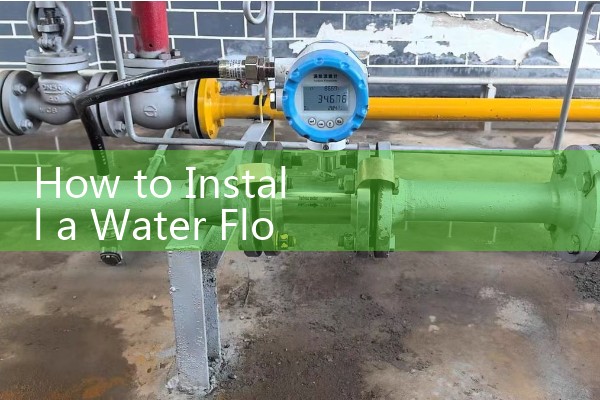
Here is the thing. Most engineers skip the grounding test. In plastic or lined pipe, grounding is not automatic. The flow meter measures microvolt signals. Bad grounding causes unstable readings. Use the grounding electrode included in the flow meter. Do not rely on process pipe alone.
Recommended Silver Instruments Water Flow Meters
For clean water and wastewater, we recommend the Silver Instruments electromagnetic flow meter. It covers DN15 to DN600. Accuracy is 0.5 percent of reading. Outputs include 4 to 20 mA HART, pulse, and RS485 Modbus. Liner choices are hard rubber, PTFE, or polyurethane. Hard rubber works well for raw water and seawater. PTFE works for chemical dosing lines. Polyurethane works for slurry or wastewater with solids.
For large water lines above DN600, an inline electromagnetic meter becomes heavy. In that case an ultrasonic clamp on or insertion flow meter is easier to install. A clamp on ultrasonic flow meter from Silver Instruments can measure water flow without cutting the pipe. It is used in district cooling plants in the UAE and irrigation lines in Australia. The clamp on model needs clean pipe surface and no air pockets.
For hot water or steam condensate, a vortex flow meter can be a better fit. But vortex meters need a stable flow profile. Install them with enough straight pipe. Silver Instruments offers vortex flow meters with temperature and pressure compensation using a PT100 sensor input. That gives mass flow for steam and hot water energy monitoring.
For low flow dosing of chemicals in water treatment, an oval gear flow meter works well. It measures small volumes from 2 L/h. A customer in Vietnam used a Silver Instruments oval gear meter for polymer dosing. The meter gave stable batch volume after proper air bleeding.
FAQ
1. Can I install a water flow meter myself?
You can if you have pressure piping experience. But local codes often require a licensed plumber. That keeps your warranty valid and your seals safe. We recommend a licensed plumber for flange alignment and seal integrity.
2. What straight pipe length does an electromagnetic water flow meter need?
Most Silver Instruments electromagnetic flow meters need 5D upstream and 3D downstream. Some installations after a pump or control valve need 10D upstream. Check the product manual for your exact model.
3. Does a flow meter need to be installed horizontally?
Electromagnetic flow meters can be installed horizontally or vertically. Vertical installation with upward flow keeps the pipe full. Do not install at the highest point of the pipe. Air collects there.
4. What pipe sizes do you support for water flow metering?
Silver Instruments supplies water flow meters for DN10 to DN600 as standard. Larger sizes are available on request. Send us your pipe diameter, pressure, temperature, and flow range. We will propose a model and quote.
5. How do I get a water flow meter quote?
Send us your pipe size in DN, water pressure in bar, temperature in degree C, and normal flow range. We reply within 24 hours. Contact Silver Instruments by Tel +86 25 68650347 or WhatsApp +86 25 52155837 or WeChat +86 15365082610.
Need a reliable water flow meter for your project. Tell us your pipe size, flow range, pressure, and temperature. We will send a model and price. Contact Silver Automation Instruments at Tel +86 25 68650347 or WhatsApp +86 25 52155837 or WeChat +86 15365082610.
 Hot Product
 Related AD