

『Flow Meter Box Enclosures: Protecting Outdoor Buried Water Meters From Freezing』Related information(v cone flow meter|rotary gas meter|gallon meter|gear meter|metal tube rotameter|glass tube rotameter|nutating disk meter|transit time ultrasonic flow meter|wedge flow meter|pd meters|hydraulic flow meter|ultrasonic water flow meter|water flow meter|air flow meter|magnetic water flow meter|oxygen flow meter|gas flow meter|argon flow meter|air velocity meter|gasoline flow meter|fuel flow meter|ultrasonic water meter|digital water meter|nitrogen flow meter|solid flow meter|Oxygen tank flow meter|digital water flow meter|diesel fuel flow meter|steam flow meter|02 flow meter|compressed air flow meter|oil flow meter|liquid flow meter)
Flow Meter Box Enclosures: Protecting Outdoor Buried Water Meters From Freezing
Quick Answer: Flow meter box enclosures protect outdoor buried water meters from freezing by sealing out surface water and keeping the meter below the local frost line. Use a polypropylene or SMC box with an IP68 rated cover and place the meter at least 150 mm below the frost depth. Add a 10 W to 15 W heater if the air temperature drops below minus 10 °C.
Outdoor buried water meters fail in cold regions because the meter body and sensor can freeze before the pipe itself. We have seen this problem on customer sites in Chile, Peru, Kazakhstan, and northern China. A DN25 electromagnetic flow meter body can crack after one freeze and thaw cycle if water stays inside the measuring tube. The cost is not limited to the meter. The pit, the wiring, and the telemetry unit can also fail.
What a Flow Meter Box Enclosure Does
Here is the thing. A meter box does not need to be warm. It only needs to stay above 0 °C and keep water out. The box traps heat from the ground and blocks wind chill at the surface. It also gives operators a clean access point for reading and maintenance.
A good flow meter box enclosure solves three issues at once. It prevents surface water and mud from entering the pit, it reduces night time heat loss, and it protects the meter from foot or vehicle load. In hot climates the same box keeps monsoon water and sand away from the meter.
Material and Design Choices
Polypropylene and SMC fiberglass are the most practical materials for outdoor water meter boxes. They do not rust, they handle UV exposure well, and they are light enough for two men to lift. Concrete rings are cheaper but they absorb water and can spall in freeze and thaw conditions. Steel covers are strong but they corrode fast in coastal desalination plants or Middle East sites with salt spray.
We recommend UV stable polypropylene for standard water meter pits and SMC for light vehicle traffic areas. For a DN80 electromagnetic flow meter with a flow range from 10 m³/h to 120 m³/h, a 600 mm by 600 mm box usually works. For a DN100 meter with a pressure transmitter and a PT100 sensor inside, use a 800 mm by 800 mm round or square box.
Installation Depth and Drainage
The bottom of the flow meter box should sit at least 150 mm below the local frost line. In northern China that can mean 600 mm of cover. In Tasmania, southern Chile, or the South Island of New Zealand, 300 mm can be enough. But a deep box alone is not enough. You also need drainage.
Place 20 mm to 40 mm of washed gravel at the bottom of the pit. Do not seal the bottom with concrete. A sealed bottom traps water and can cause the meter to float or freeze. Use a geotextile layer between the gravel and the native soil if the soil is silty. That stops fine material from filling the drainage zone.
Sealing and Electrical Connections
Use a closed cell foam gasket under the cover. Cable entry glands should be IP68. If you install a pressure transmitter or PT100 inside the box, route the cable through a strain relief and leave a drip loop outside the pit. For 4-20 mA HART signal wiring, connect the shield only at the control panel end. That avoids ground loops in wet pits.
In wastewater sites with methane gas, order an ATEX Zone 1 rated enclosure and seal all conduit entries with approved compound. For desalination plants, the box should resist salt water and constant humidity. Conductivity sensors that read in µS/cm can be mounted inside the same box if there is enough space.
Heating for Extreme Cold
In places where the air temperature stays below minus 10 °C for more than 12 hours, add a 10 W to 15 W thermostatic strip heater. Set the thermostat to 5 °C. Do not point the heater directly at a plastic meter body. The goal is to keep the internal air above 2 °C, no
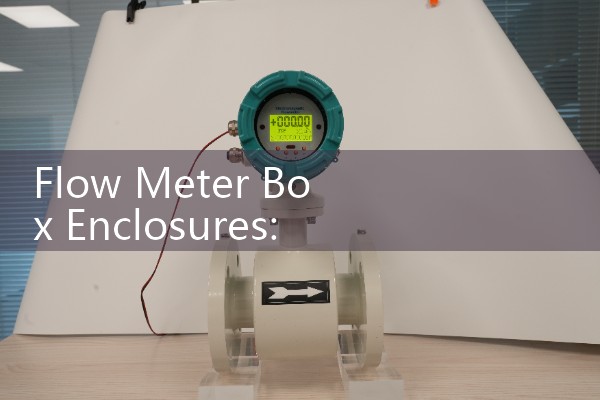
Most engineers skip this part until a meter freezes, then they retrofit the heater. We supplied a polypropylene box and a small heater to a water utility in Kazakhstan after a DN40 ultrasonic meter split during a cold snap. The repair cost was higher than the box and heater combined.
Regional Applications
In Southeast Asia, the main risk is not freezing but monsoon water and street flooding. Last year a customer in Vietnam asked us for a box that could survive constant rain and occasional standing water. We supplied a polypropylene box with a neoprene gasket and a submersible electromagnetic flow meter. The meter is still working after two rainy seasons.
In the Middle East and Australia, UV damage and sand are bigger problems than frost. A UV stable cover with a tight seal keeps sand out of the pit and protects the meter display. In Latin America, high altitude cities in Chile, Peru, and Bolivia can have freezing nights even in summer. The same enclosure rules apply.
Choosing the Right Box for Your Meter Type
For potable water distribution, DN15 to DN100 electromagnetic flow meters fit well in rectangular or round boxes. Ultrasonic water meters are less sensitive to small ice particles but the electronics still need a dry box. For chemical dosing in water treatment, oval gear flow meters can sit in a shallow pit with the cover at grade. Always separate the flow meter from the valve stack so maintenance does not flood the meter box.
If you need a flow meter box enclosure for an existing meter, send us the external dimensions of the meter body, the pipe size in DN, and the cover load class. We can match the box size and the material to your site. Silver Automation Instruments supplies electromagnetic flow meters, ultrasonic water meters, and oval gear flow meters with matching accessories.
Contact Silver Automation Instruments
If you are sizing a flow meter box enclosure, send us your pipe size in DN, water pressure in bar, minimum ambient temperature in °C, and flow range in m³/h. We will quote a matched flow meter and enclosure with the correct IP rating.
Silver Automation Instruments
Tel: +86-25-68650347
Whatsapp: +86-25-52155837
WeChat: +86 15365082610
FAQ
How deep should a flow meter box be?
The bottom of the box should be at least 150 mm below the local frost line. Check your local frost depth first. In many cold regions the frost line is between 300 mm and 800 mm. For a water meter pit, total depth from grade to the bottom of the box is often 600 mm to 1000 mm.
What is the best material for an outdoor water meter box?
UV stable polypropylene is the best general purpose choice. It does not rust, it handles impact well, and it seals with a gasket. SMC fiberglass is better for light vehicle traffic areas. Concrete works but it can absorb water and spall in freezing conditions.
Can I use a flow meter box enclosure in a hot desert climate?
Yes. In hot desert and tropical climates the box still protects the meter from sand, monsoon rain, and direct sun. Use a UV stable cover and make sure the cable glands are IP68. Drainage is still important because heavy rain can fill the pit quickly.
What size enclosure fits a DN50 electromagnetic flow meter?
A DN50 electromagnetic flow meter typically fits in a 500 mm by 500 mm or 600 mm by 600 mm box. The exact size depends on the meter length, the transmitter head position, and whether you install a pressure transmitter or PT100 in the same box.
How do I prevent condensation inside the meter box?
Use a sealed cover with a closed cell foam gasket and provide a small drainage path at the lowest point. Add a vent fitting with a hydrophobic membrane if the box is deep. In cold climates a small heater can reduce condensation and keep the air above freezing.
 Hot Product
 Related AD