

『Impeller Turbine Mass Flow Meter: Utilizing Multi-Variable Math to Calculate True Gas Mass Flows』Related information(v cone flow meter|rotary gas meter|gallon meter|gear meter|metal tube rotameter|glass tube rotameter|nutating disk meter|transit time ultrasonic flow meter|wedge flow meter|pd meters|hydraulic flow meter|ultrasonic water flow meter|water flow meter|air flow meter|magnetic water flow meter|oxygen flow meter|gas flow meter|argon flow meter|air velocity meter|gasoline flow meter|fuel flow meter|ultrasonic water meter|digital water meter|nitrogen flow meter|solid flow meter|Oxygen tank flow meter|digital water flow meter|diesel fuel flow meter|steam flow meter|02 flow meter|compressed air flow meter|oil flow meter|liquid flow meter)

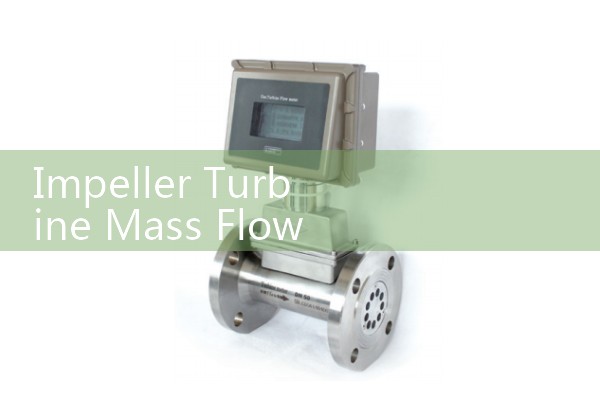
Impeller Turbine Mass Flow Meter: Utilizing Multi-Variable Math to Calculate True Gas Mass Flows
Quick Answer: An impeller turbine flow meter reads actual gas volume at line pressure and temperature. That reading does not equal true gas mass flow. Silver Instruments combines the turbine sensor, a pressure transmitter, a PT100 temperature probe, and a flow computer to output kg/h or Nm3/h over 4-20 mA HART.
Most engineers have seen a turbine meter spin fast on a low pressure air line and slow on a high pressure line. The pulse rate changes because actual volumetric flow changes. But the mass of gas moving through the pipe may be the same. That is the core problem with measuring gas by volume alone.
Why a Turbine Meter Alone Does Not Give True Gas Mass Flow
A turbine flow meter has an impeller installed in the flow path. Gas moves the impeller. Each rotation produces a pulse. The frequency is proportional to actual cubic meters per hour at line conditions. That is Qv. It is not standard volume and not mass.
For a natural gas line at 10 bar, the gas is about 10 times denser than the same line at 1 bar. A turbine meter reading 100 m3/h at 10 bar moves about 10 times more mass than the same reading at 1 bar. Temperature changes add another error source. A 10 °C shift can change density by about 3 percent for many gases.
In practice, unprocessed gas is rarely at stable pressure and temperature. A pressure regulator may hold pressure constant for small lines. But larger process lines, biogas headers, and compressed air networks drift. This drift causes billing errors, process control mistakes, and wrong emissions reporting.
Multi-Variable Math Inside the Silver Instruments Flow Meter
Silver Instruments uses a multi-variable approach to convert turbine pulses into true gas mass flow. The flow computer reads three signals at the same time. The first is the turbine pulse frequency. The second is the absolute pressure from an integrated pressure transmitter. The third is the process temperature from a PT100 probe.
The calculation follows real gas equations. Density equals pressure multiplied by molar mass, divided by compressibility factor, universal gas constant, and absolute temperature. We write it as ρ = P × M / (Z × R × T). The flow computer calculates ρ at actual process conditions. Then it multiplies density by the actual volumetric flow to get mass flow in kg/h.
Silver Instruments stores gas properties in the firmware. Common gases include compressed air, nitrogen, natural gas, carbon dioxide, biogas, and flare gas. For mixed gases, a customer can enter the molar mass and compressibility curve. The unit can also output standard volume in Nm3/h by using a fixed reference condition, usually 1.01325 bar and 0 °C or 15 °C depending on contract terms.
The calculated mass flow is available as a 4-20 mA HART signal. A pulse output carries the raw turbine frequency for totalization. An optional RS485 Modbus port gives pressure, temperature, density, mass flow, and totalized mass as register values. This is useful for PLC and SCADA integration.
Hardware and Accuracy for Field Installations
The inline turbine meter comes in sizes from DN15 to DN300. Pressure ratings go up to 100 bar for gas service. The standard process temperature range is -40 °C to 180 °C. Wetted parts are 316 stainless steel for the body and impeller. Bearing options include tungsten carbide and ceramic for dry or dirty gas.
The integrated pressure transmitter and PT100 mount in the meter body or in a nearby straight run. The flow computer can be remote or integral. A remote version suits high vibration areas. Integral versions simplify wiring for small skid packages.
Accuracy depends on the gas and flow range. For a typical natural g
Hazardous area approvals include ATEX Zone 1 and IECEx. For a biogas project in Thailand or a gas distribution skid in Australia, this rating is often mandatory. The electronics can be supplied with a local display or a blind transmitter.
Field Example from a Biogas Plant in Vietnam
A biogas plant in Vietnam ran a DN80 turbine meter on a digester gas header. The gas was about 60 percent methane and 40 percent carbon dioxide. Operating pressure varied from 0.5 bar to 2 bar depending on the downstream boiler load. Temperature changed between 30 °C and 45 °C. The plant wanted true mass flow in kg/h for its gas engine consumption report.
The initial setup used only the turbine pulse output. The plant control system assumed a constant density at 1 bar and 35 °C. This caused up to 18 percent error in the reported gas mass flow when the header pressure moved. The site team replaced the pulse only unit with a Silver Instruments multi-variable turbine mass flow meter. The flow computer compensated pressure and temperature every second. The reported error dropped to under 1.5 percent.
The plant now uses the 4-20 mA HART output for mass flow and the Modbus register for totalized daily consumption. The same meter also gives a pressure and temperature reading to the control room. That removed two extra transmitters and reduced wiring work.
How to Size and Order the Right Meter
Sizing a gas turbine meter is not the same as sizing a liquid meter. You must know the minimum and maximum flow rates at actual pressure and temperature, not just standard volume. For example, a customer may say 500 Nm3/h of compressed air. If the line pressure is 7 bar and temperature is 25 °C, the actual flow is about 78 m3/h. That changes the meter size from DN80 to DN50.
Send us your gas type or composition, operating pressure in bar, temperature in °C, pipe size in DN, and flow range. Also tell us the ambient temperature, hazardous area classification, and whether you need local totalization. Silver Instruments will propose a complete meter with the right flow computer, pressure sensor, and PT100 probe.
Contact details are below.
Tel: +86-25-68650347
Whatsapp: +86-25-52155837
WeChat: +86 15365082610
Website: flow-meter.com.au
FAQ: Impeller Turbine Gas Mass Flow Meters
1. What does an impeller turbine flow meter actually measure?
It measures actual volumetric flow at line pressure and temperature. It does not measure mass flow directly.
2. Why do I need pressure and temperature compensation for gas flow?
Gas density changes with pressure and temperature. Without compensation, the same volumetric reading can represent very different mass flow rates.
3. Can Silver Instruments use this meter for biogas or flare gas with changing composition?
Yes. The flow computer accepts molar mass and compressibility inputs for mixed gases. For highly variable composition, an optional gas chromatograph signal can update the molar mass in real time.
4. What output signals are available for PLC integration?
Standard outputs are 4-20 mA HART and pulse. Optional RS485 Modbus gives pressure, temperature, density, mass flow, and totals.
5. How do I get a quote for my application?
Send your gas type, pressure in bar, temperature in °C, pipe size in DN, and flow range to Silver Instruments. The team will reply with a model selection and price.
 Hot Blog
 Related AD