

 Current position > News detail
『Impeller Flow Meter Working Principle: Translating Fluid Bladed Wheel RPM into Instant Volume Rates』Related information(v cone flow meter|rotary gas meter|gallon meter|gear meter|metal tube rotameter|glass tube rotameter|nutating disk meter|transit time ultrasonic flow meter|wedge flow meter|pd meters|hydraulic flow meter|ultrasonic water flow meter|water flow meter|air flow meter|magnetic water flow meter|oxygen flow meter|gas flow meter|argon flow meter|air velocity meter|gasoline flow meter|fuel flow meter|ultrasonic water meter|digital water meter|nitrogen flow meter|solid flow meter|Oxygen tank flow meter|digital water flow meter|diesel fuel flow meter|steam flow meter|02 flow meter|compressed air flow meter|oil flow meter|liquid flow meter)
Impeller Flow Meter Working Principle: Translating Fluid Bladed Wheel RPM into Instant Volume Rates
Quick Answer: An impeller flow meter converts the rotational speed of a bladed wheel into a volume flow rate. The fluid pushes the impeller blades, the wheel rotates, and a sensor counts each rotation. The meter electronics convert rotations per minute to litres per minute or cubic metres per hour using a calibrated K factor.
What Happens Inside the Flow Tube
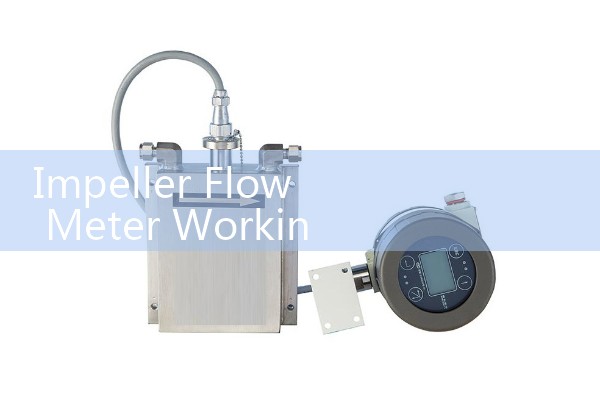
Fluid enters the meter body and hits the impeller blades. The impeller sits on a shaft inside a cylindrical chamber. The blade angle and the flow path force the fluid to spin the wheel. Each rotation corresponds to a fixed swept volume. A pickup sensor detects blade passage. The sensor can be a reed switch, Hall effect sensor, or an inductive coil.
In practice, low viscosity liquids like water, diesel, and light chemicals produce stable rotation. High solids or sticky fluids can slow the wheel or clog the bearing. Most engineers skip the impeller design for slurries and choose an electromagnetic flow meter instead.
From RPM to Instant Volume Rate
The flow computer or transmitter receives pulses from the sensor. Each pulse equals a known volume. The formula is simple. Volume per minute equals pulses per minute divided by the K factor. The K factor is expressed in pulses per litre or pulses per gallon. A meter with a K factor of 500 pulses per litre and a measured 2500 pulses per minute gives 5 litres per minute.
Here is the thing. Temperature and viscosity change the K factor slightly. Good meters include linearisation tables. Silver Automation Instruments supplies impeller flow meters with field adjustable K factor settings for fuels and low viscosity chemicals.
Sensor Types and Output Signals
Hall effect sensors are common for clean water and fuel. Reed switches are cheaper but have a lower frequency limit. Inductive pickups handle higher RPM ranges. The raw pulse output feeds a local display, PLC, or flow totalizer. Many users ask for 4-20 mA HART output for longer cable runs. A pulse output works well for batching and dosing systems in food and beverage plants.
For hazardous area fuel skids, the pulse pickup can be supplied with ATEX Zone 1 certification. Some display models include a PT100 temperature input for compensated volume readings.
Calibration and K Factor
Factory calibration uses water or a reference oil at a fixed temperature. The K factor changes with flow rate. A typical curve is flat in the mid range and drops at low flow. Users should not operate below the minimum linear flow range. For example, a DN25 impeller meter may have a range of 2 to 40 litres per minute. Below 2 litres per minute the bearing friction affects accuracy.
We have seen this on customer sites many times. A paint manufacturer in Southeast Asia replaced a turbine meter with an impeller meter for solvent batching. The repeatability was within 0.5 percent after field calibration.
Installation and Pipe Requirements
Impeller flow meters need a full pipe and a stable velocity profile. Install the meter with straight pipe upstream and downstream. Ten pipe diameters upstream and five downstream is a common rule. Avoid air
Common Fluids and Industry Use
These meters work well for clean water, diesel, light oils, glycol, and low viscosity chemicals. They are used in irrigation skids, RO plants, fuel consumption monitoring, and batch dosing. They are not ideal for liquids above 10 cP. High viscosity fluids create a thick boundary layer on the blades and reduce accuracy.
RO plants in desalination facilities use impeller meters on permeate and cleaning skids. A seawater flow meter for desalination plant feed lines usually needs a magnetic flow meter or clamp on ultrasonic meter because raw water contains solids and high conductivity. The impeller meter works with demineralized water below 5 µS/cm where an electromagnetic flow meter may need special electrodes.
Model Selection: What Details to Send
Send us your fluid type, pipe size (DN), flow range, pressure (bar), and temperature (°C). We will recommend a meter with the right body material, bearing material, and output signal. For fuels choose aluminum or stainless steel body with PTFE or ceramic bearings. For demineralized water choose PP or PVDF body. For food contact choose 316L stainless steel.
Silver Automation Instruments supplies impeller flow meters from DN15 to DN50 as standard. Larger line sizes are available with insertion probes. We support pulse, 4-20 mA, and RS485 outputs. The meters can be supplied with local indication or blind transmitters. A local display can switch between litres per minute, cubic metres per hour, or kg/h for fuels with known density.
FAQ
Can an impeller flow meter measure compressed air?
No. Impeller meters are designed for liquids. Air does not provide enough force to rotate the wheel reliably. Use a thermal mass flow meter or vortex flow meter for gas.
What is the difference between an impeller flow meter and a turbine flow meter?
An impeller meter uses a simple paddle wheel inserted into the flow. A turbine meter uses a rotating element with helical blades across the full pipe. Impeller meters are cheaper and easier to clean. Turbine meters have higher accuracy in some ranges but cost more.
Can the meter handle diesel fuel custody transfer?
For internal consumption monitoring yes. For official custody transfer, verify local metrology approvals. Many customers use impeller meters for genset fuel monitoring in the Philippines and Vietnam.
What is the typical accuracy?
Standard accuracy is plus or minus 1 percent of full scale. Linearised electronics can reach plus or minus 0.5 percent of reading in the middle flow range.
How do we order a replacement impeller?
Give us the meter model and serial number. We stock replacement impellers, shafts, and bearings. Send us your fluid and operating hours per day so we can check wear life.
Contact Silver Automation Instruments. Tel: +86-25-68650347. Whatsapp: +86-25-52155837. WeChat: +86 15365082610. Website: flow-meter.com.au
Send us your pressure in bar, temperature in °C, pipe size in DN, and flow range in litres per minute. We will reply with a quote and lead time.